Each wave conveniently clears inventory without Beirut needing to lift a finger or risk internal fracture.
Beirut, February 16 – Lebanon’s government today reaffirmed its long-standing plan to disarm the Shiite proxy of Iran that dominates the country’s politics: wait for that proxy to provoke the Jewish State to the south, and then the IDF will do the work.
The statement came from Deputy Minister of Interior Affairs Karim al-Saad during a sparsely attended press briefing on border security. “We fully endorse UN Security Council Resolution 1701,” al-Saad declared. “Our commitment remains unwavering. Hezbollah’s weapons south of the Litani will be neutralized — as soon as external parties resume the necessary operations.” He described the approach as “sustainable delegation,” a policy that has preserved Lebanese sovereignty by outsourcing enforcement since 2006.
A senior official from the caretaker cabinet elaborated off-record. “Disarmament is a noble goal,” the official said. “But why expend political capital — or actual capita l— when history provides a reliable contractor? Israel has demonstrated competence in this area multiple times. We monitor progress, issue condemnations, and prepare reconstruction tenders. It’s efficient.”
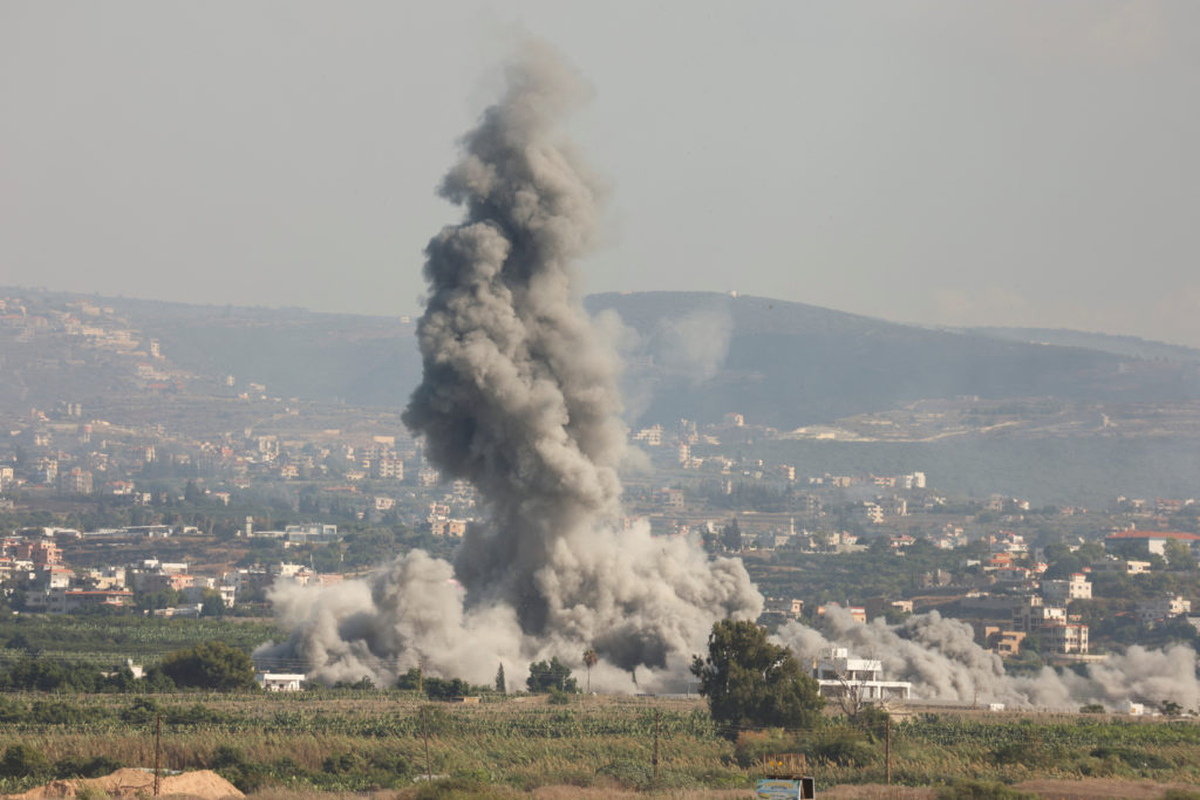
The official pointed to recent Israeli airstrikes that targeted alleged Hezbollah positions near Tyre and Nabatieh, noting that each wave conveniently clears inventory without Beirut needing to lift a finger or risk internal fracture.
Al-Saad projected a slide titled “Disarmament Progress Tracker (2006–2026),” which consisted of a single horizontal line labeled “Status: Pending Israeli Action.” Spikes in the chart marked major escalations —2006, 2024, late 2025 — each followed by a return to baseline. “Metrics confirm consistency,” he said. “Every cycle reduces Hezbollah’s visible footprint temporarily, buys time for new Iranian shipments, and allows us to maintain plausible deniability. No domestic arrests, no coalition implosion, no budget strain on the already insolvent treasury.”
“And let’s not forget the pager episode,” the official added with a thin smile. “When your suppliers start sending explosive telegrams to operatives and civilians alike, one might think twice before volunteering to collect the hardware. We prefer to let the other side handle quality control on Iranian tech — saves us the paperwork and the funerals.”
After two decades of the same script: rocket barrages, Israeli responses, UN appeals, ceasefire lines redrawn, Lebanon still refuses to act domestically. Al-Saad offered a weary shrug. “We could confront Hezbollah tomorrow,” he conceded, “But by deferring to the one actor guaranteed to respond decisively, we preserve national unity and avoid the mess of civil confrontation. Call it cowardice; we call it strategic patience. When the next round concludes, both sides will emerge claiming moral victory: Israel will have protected its north, Hezbollah will have resisted, and Lebanon will have survived — again. That shared exhaustion is the closest thing we have to consensus.”
Please support our work through Patreon.
Buy In The Biblical Sense: https://www.amazon.com/dp/B0B92QYWSL



 Fabulous Facebook Comments!
 Glorious Google+ Comments!
 Wordpress Comments