“I don’t even have a proper education beyond religious seminars.”
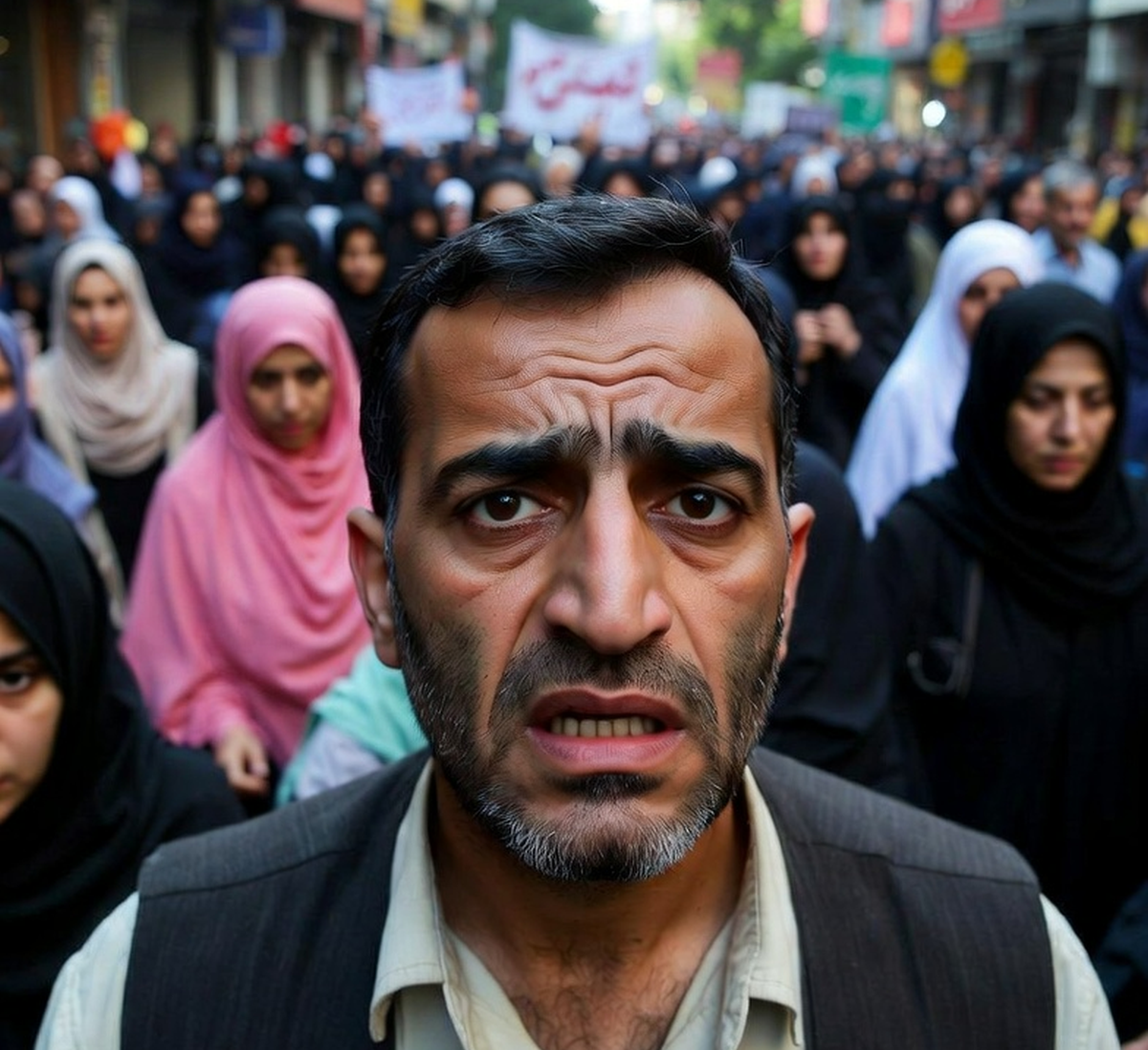
Tehran, January 8 – In the shadowed alleys of Tehran’s conservative neighborhoods, where the morality police once patrolled with unyielding zeal, a former hijab enforcer named Reza (a pseudonym) now spends his days in quiet anxiety, dreading perpetual unemployment because he does not know how to do anything productive other than arrest and abuse women.
Once a proud member of the Gasht-e Ershad, Iran’s guidance patrol tasked with enforcing mandatory veiling, Reza admits he lives in dread of the Islamic Republic’s downfall.
“If this system collapses, what will I do?” Reza confided in a rare, anonymous conversation. “I have no other skills. My entire career has been lecturing women on their headscarves, issuing warnings, and reporting violations. Who would hire someone like me in a free Iran? Driving a taxi? I don’t even have a proper education beyond religious seminars.”
Reza’s fears reflect a broader unease among the regime’s mid- and lower-tier enforcers—many drawn from the Basij paramilitary or devout working-class families—who have built livelihoods around upholding theocratic rules. With the Iranian rial plummeting to record lows in late 2025, sparking the largest protests since the 2022 Woman, Life, Freedom uprising, talk of regime fragility has grown louder. Economic collapse, widespread defiance of hijab laws, and international pressures have left hardliners rattled.
For years, enforcers like Reza benefited from state perks: modest salaries, authority over public morality, and a sense of purpose in “promoting virtue.” But as women increasingly discard their hijabs in open rebellion—fueled by the memory of Mahsa Amini’s death in custody—the job has become perilous and increasingly irrelevant. Morality patrols have waxed and waned, often scaled back to avoid igniting fresh unrest, leaving many enforcers sidelined or reassigned.
“I joined because it was steady work and aligned with my beliefs,” Reza said. “Now the youth hate us. If change comes, we’ll be the first scapegoats—no pensions, no references, just resentment.”
Analysts note that such anxieties underscore another of the regime’s vulnerabilities: its foot soldiers, dependent on the system for survival, lack transferable expertise in a modern economy – and loyalists long accustomed to patronage and privileged access to resources now confront a world in which they enjoy no privilege, only the resentment of the masses – and no way to earn a living, because demand for professional kidnappers, abusers, and rapists is expected to plummet if Khamenei and his supporters are forced to relinquish power.
Please support our work through Patreon.
Buy In The Biblical Sense: https://www.amazon.com/dp/B0B92QYWSL



 Fabulous Facebook Comments!
 Glorious Google+ Comments!
 Wordpress Comments