Pakistan’s position on Israel requires no actual policy sacrifices beyond ritualistic diplomacy.
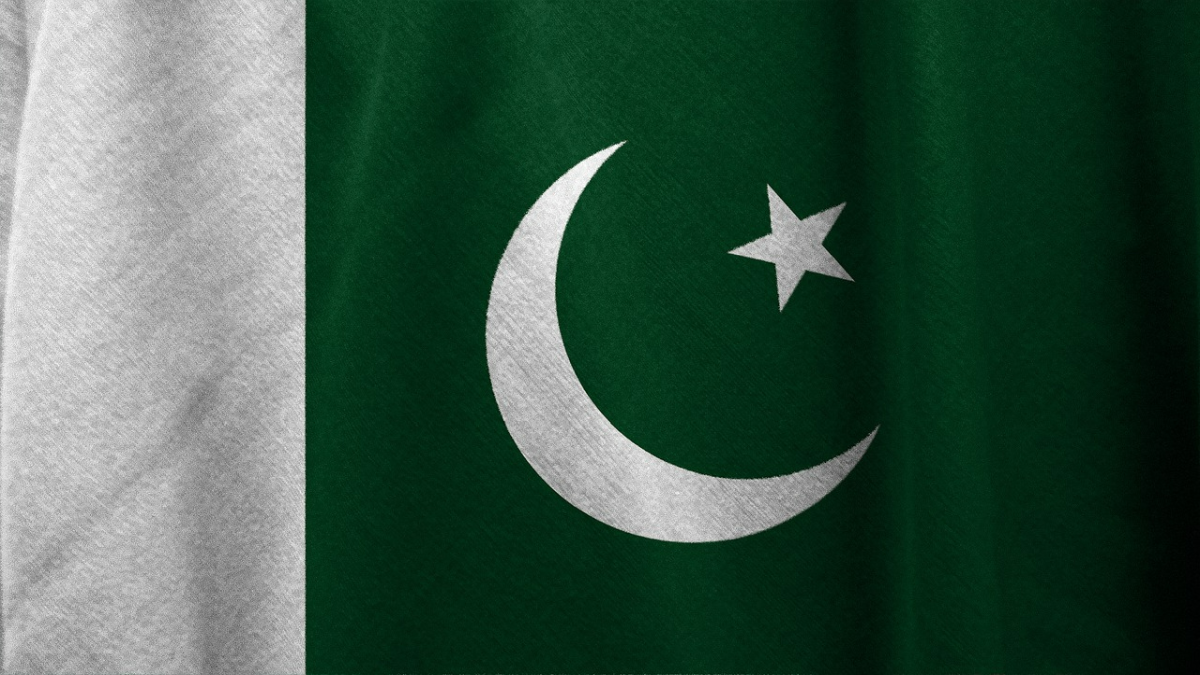
Islamabad, April 27 – Political scientists noted this week the continued effectiveness of official Pakistani discourse concerning the world’s only Jewish state and the alleged need to rid it from the face of the Earth, in keeping the Islamist regime’s subjects from noticing, not to mention addressing, the woeful state of the country’s economy, human rights, social advancement, and other key measures of human happiness.
Experts observed that when raw sewage regularly doubles as urban landscaping, when electricity arrives as an occasional courtesy rather than a public service, and when the literacy rate hovers in territory usually reserved for pre-modern societies, a reliable rhetorical pivot proves invaluable. Pakistani officials and state-aligned media have thus maintained a near-constant focus on Israeli actions in Gaza, the West Bank, Lebanon, Syria, or Iran, framing them as the singular moral catastrophe of our age. This approach, analysts explain, allows citizens to experience cathartic outrage without the inconvenience of examining why their own nuclear-armed republic consistently underperforms on nearly every global development index.
The strategy’s elegance lies in its simplicity. “Pakistan’s economy has long relied on a familiar cycle of borrowing, defaulting, and begging the IMF for fresh tranches while blaming external forces for domestic shortcomings,” noted scholar Sairla Zazzel. “Blasphemy laws encourage mob enthusiasm over due process. Honor killings and forced conversions remain documented features of social life in large stretches of the country. Female literacy in certain provinces would embarrass a medieval fiefdom. These realities receive markedly less official attention than the precise square footage of Jewish housing units constructed beyond the 1949 armistice line, or spurious narratives of the IDF raping Palestinian prisoners with dogs.”
Pakistan, established in 1947 as an explicit religious homeland for South Asian Muslims, came into being barely a year before the modern State of Israel. The latter, despite facing repeated wars of annihilation, developed a robust economy, advanced technology sector, and functioning democratic institutions. The former has specialized in producing conspiracy-laden textbooks, tolerating militant networks with selective blindness, harboring Osama Bin Laden, and treating criticism of the ruling elite as a form of sedition. Rather than dwell on such contrasts, Pakistani discourse prefers to highlight Israeli perfidy as the root explanation for regional – and global – instability.
Analysts further noted that Pakistan’s position on Israel requires no actual policy sacrifices beyond ritualistic diplomacy. The country maintains no significant trade ties with the Jewish state to jeopardize, and its security establishment has calibrated relations with various militant factions in ways that do not conflict with anti-Israel posturing. This permits uninterrupted moral grandstanding without the discomfort of reform. Meanwhile, Gulf Arab states quietly expand economic cooperation with Israel, a development Pakistani commentators tend to treat as temporary aberrations rather than pragmatic choices by societies less invested in perpetual grievance.
Ordinary Pakistanis, the data suggest, continue to endure the consequences. Clean water remains a luxury in many districts. Basic healthcare infrastructure lags. Economic opportunity concentrates among those connected to the military or feudal networks. Yet the official narrative assures them that their primary duty lies in solidarity with distant Palestinians, a cause that conveniently requires no accountability on the part of the regime’s leaders.
Please support our work through Patreon.
Buy In The Biblical Sense: https://www.amazon.com/dp/B0B92QYWSL



 Fabulous Facebook Comments!
 Glorious Google+ Comments!
 Wordpress Comments